
Matrix operations are fundamental concepts in linear algebra, and understanding how to add and subtract matrices is crucial for advancing in mathematics and other fields. Matrices are arrays of numbers, symbols, or expressions, arranged in rows and columns, and they have numerous applications in physics, engineering, computer science, and more. The ability to perform operations on matrices, such as addition and subtraction, is essential for solving systems of equations, representing linear transformations, and analyzing data.
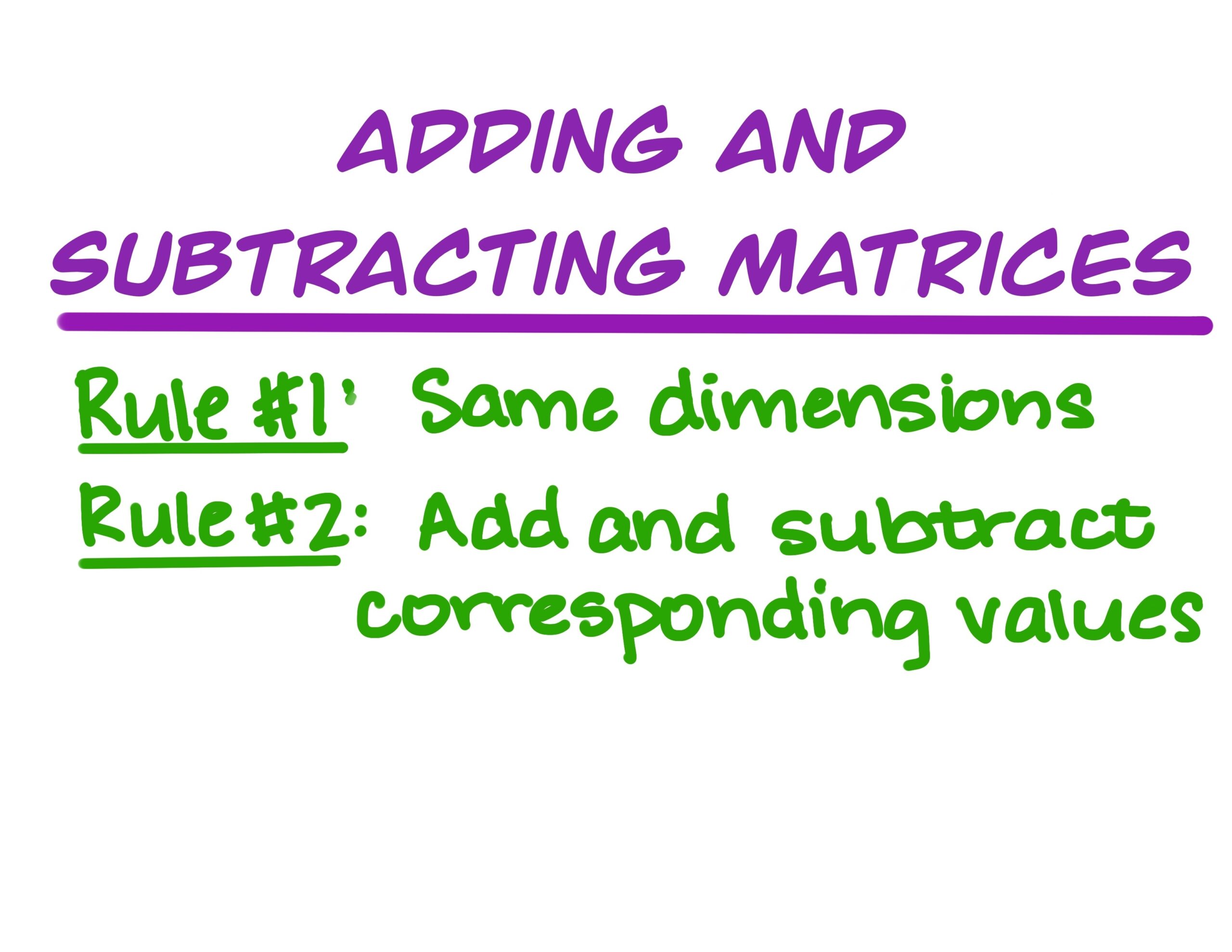
When it comes to adding and subtracting matrices, the process involves performing element-wise operations. For matrix addition, corresponding elements in the two matrices are added together. Similarly, for subtraction, corresponding elements are subtracted. However, these operations can only be performed if the matrices have the same dimensions, meaning they must have the same number of rows and columns. This restriction is crucial because it ensures that the resulting matrix has a defined size and that the operations can be carried out consistently.
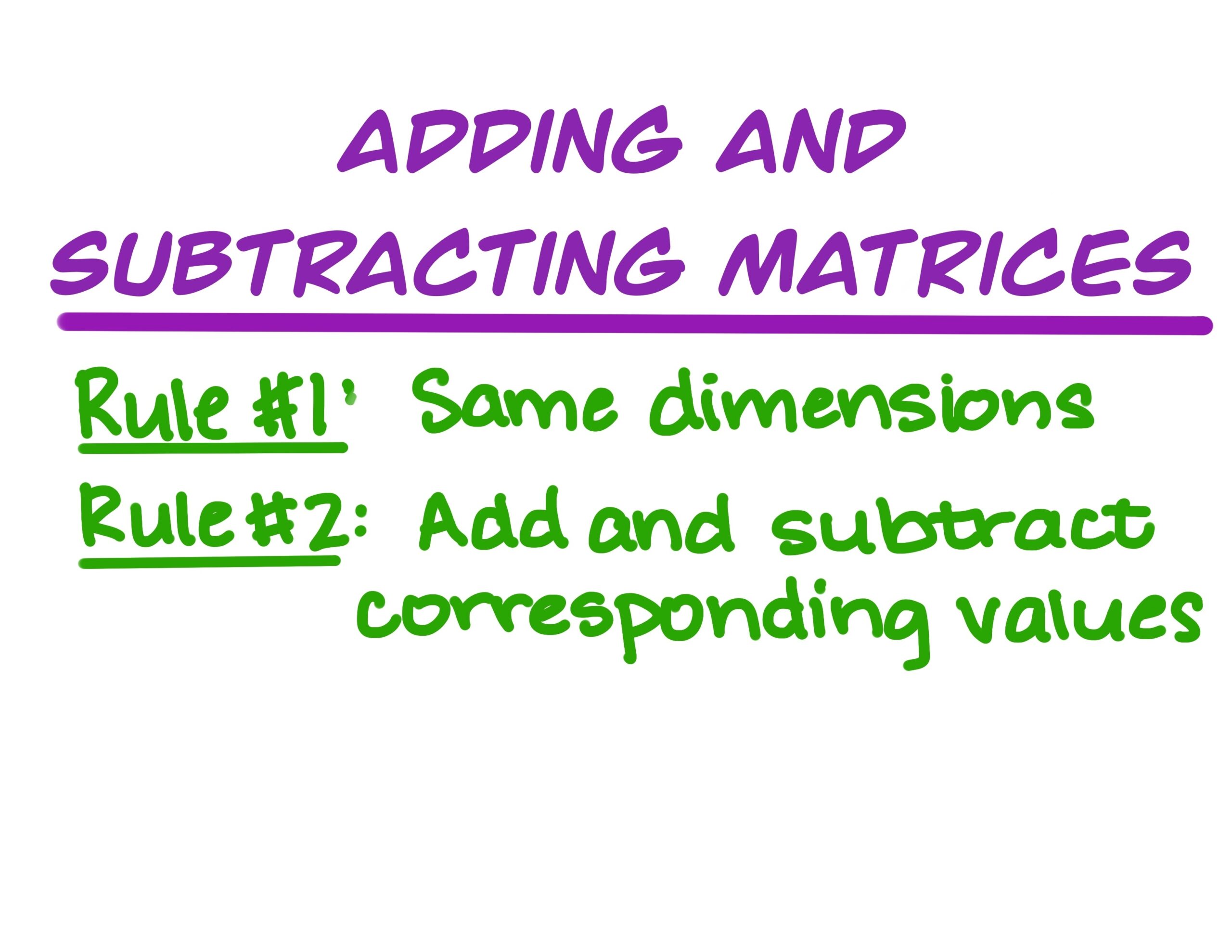
Adding And Subtracting Matrices Expii
Understanding Matrix Addition
Understanding matrix addition is the first step in mastering matrix operations. It involves taking two matrices of the same size and adding their corresponding elements. This results in a new matrix where each element is the sum of the elements from the same position in the original matrices. For example, if we have two 2×2 matrices, A and B, their sum would be a new 2×2 matrix, C, where each element c_ij of C is the sum of the elements a_ij of A and b_ij of B. This concept is straightforward but requires attention to detail to ensure that the addition is performed correctly.
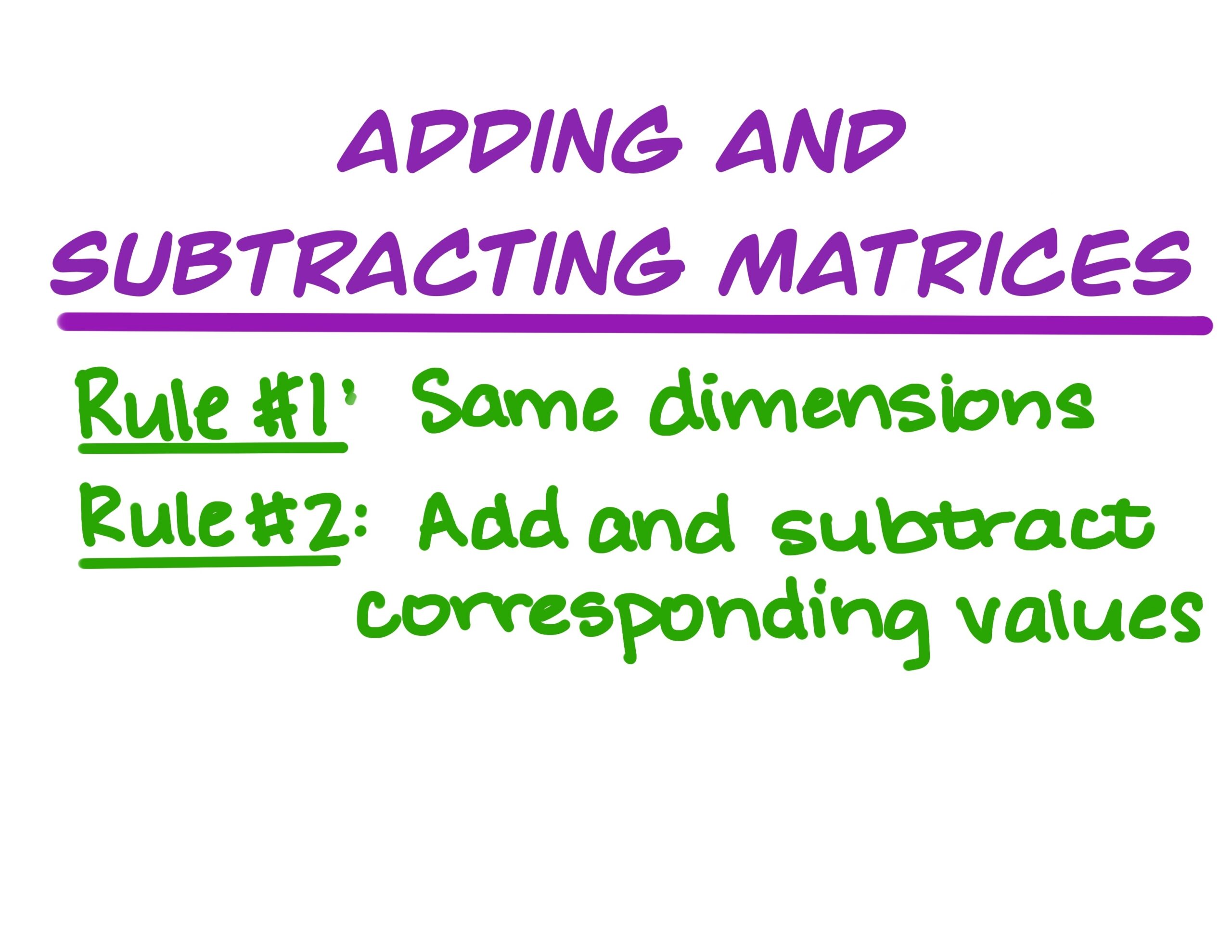
Adding And Subtracting Matrices Expii
Subtraction of Matrices
Subtraction of matrices follows a similar process to addition but involves subtracting corresponding elements instead. Given two matrices A and B of the same dimensions, the difference is a new matrix where each element is the result of subtracting the corresponding element of B from the corresponding element of A. Matrix subtraction is used in various applications, including data analysis and scientific computing, where the difference between two sets of data represented as matrices needs to be calculated. Like addition, subtraction requires the matrices to have the same dimensions to be valid.
Practical Applications
Practical applications of matrix addition and subtraction are vast and varied. In computer graphics, matrices are used to perform transformations on images and objects, such as rotations, scaling, and translations. These transformations often involve adding or subtracting matrices to achieve the desired effect. In engineering, matrices are used to solve systems of equations that describe the behavior of complex systems, such as electrical circuits or mechanical structures. Understanding how to add and subtract matrices is fundamental to working with these systems and predicting their behavior under different conditions.
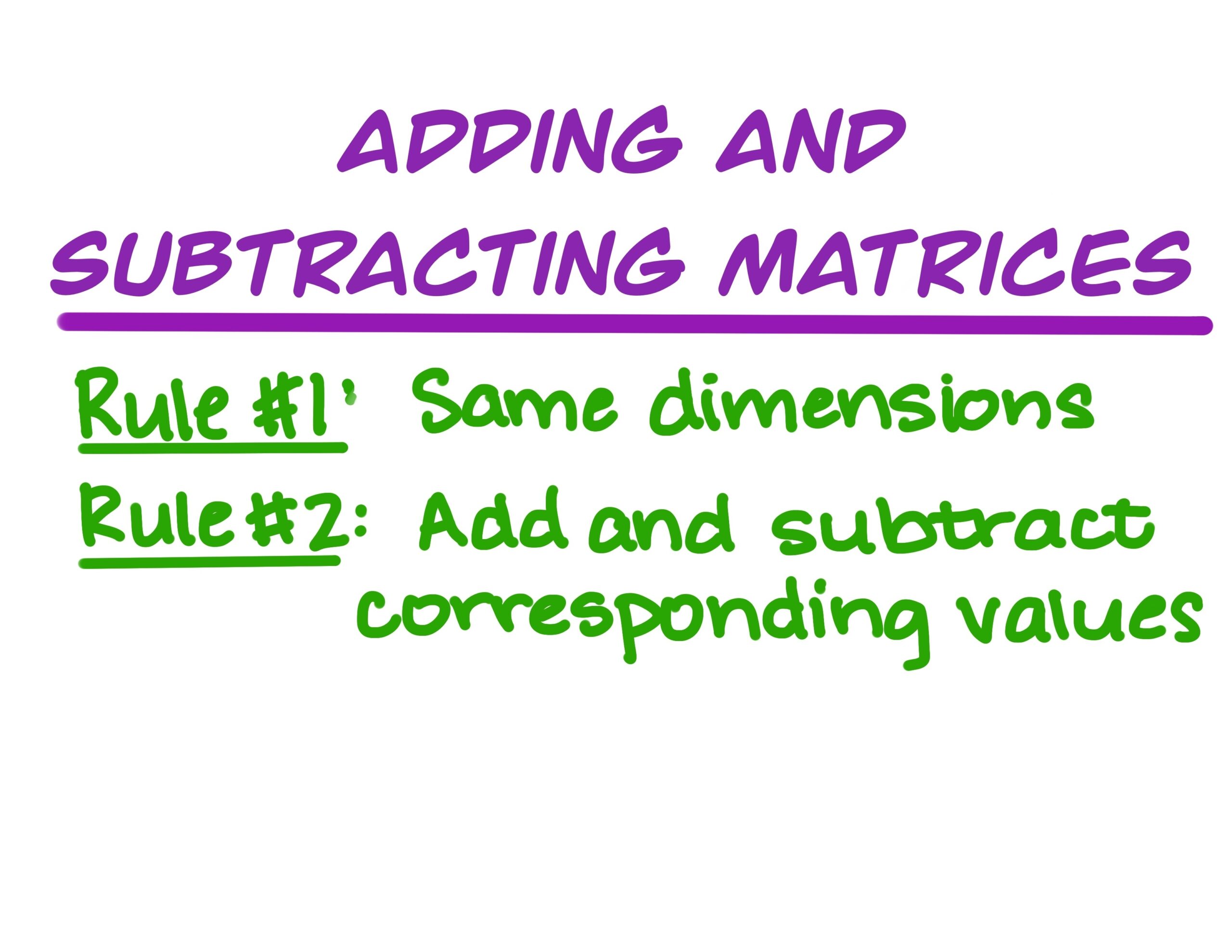
Adding And Subtracting Matrices Expii
In conclusion, mastering the art of adding and subtracting matrices is a critical skill for anyone interested in mathematics, science, and engineering. With practice and the right resources, such as the Adding And Subtracting Matrices Worksheet #1 Answers, students can develop a deep understanding of these operations and apply them to real-world problems. Whether it’s for academic purposes or professional applications, the ability to work with matrices confidently is a valuable asset that can open doors to new opportunities and challenges.
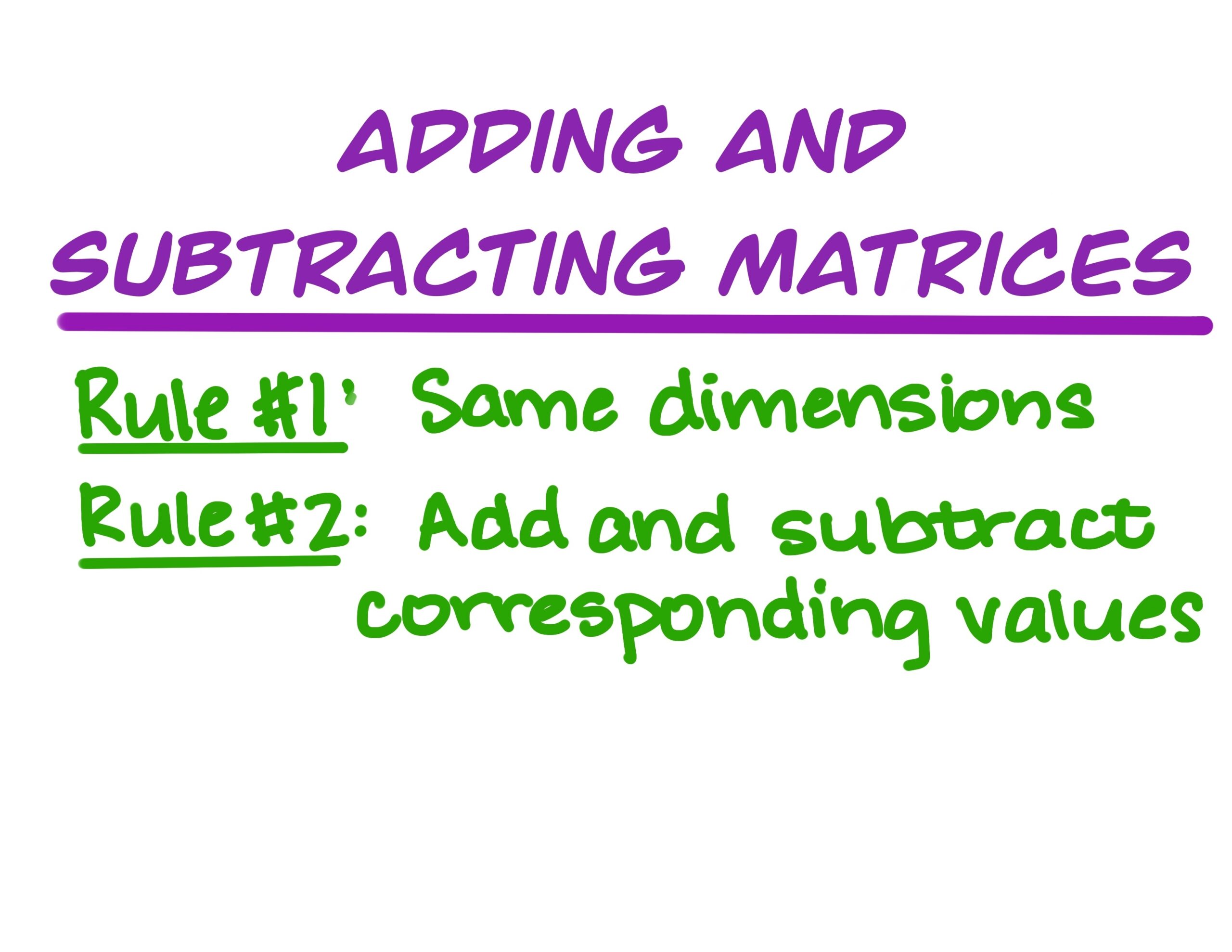
Adding And Subtracting Matrices Expii
Adding And Subtracting Matrices Expii